
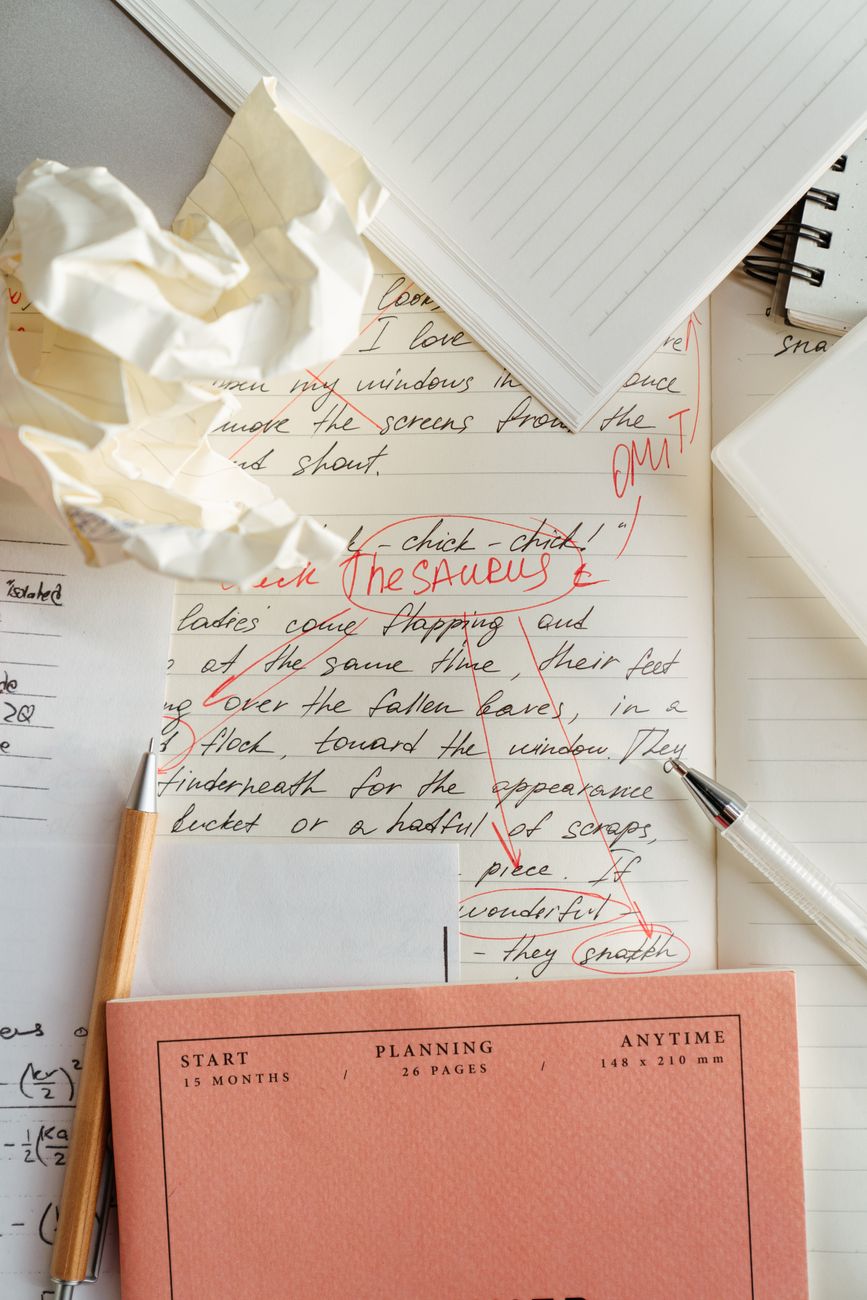
After drafts zero and one, editing starts to feel like a never-ending battle.
Maybe you’ve been there. Maybe you will be one day.
It’s easy to get lost in the details. Everyone says to fix the big picture first—structure, characters, plot—and only then move to the text level. But most of us have the urge to work on the interior of the house: what furniture matches what carpet and curtains. We don’t want to deal with the design and structure of the house itself—the exact square footage of usable space, the division of rooms, window placement, wall thickness.
I know. We know. We all know.
But it’s easier said than done.
Right now, I’m working on structure and smoothing out plot lines. I’ve spent days getting lost in all the points I wanted to “work on” later, then getting anxious, then disappointed in myself, then starting to hate the project, then falling into despair.
You see, in my twenties I was learning who I was. In my thirties, I’m trying to learn how to manipulate myself.
Here’s how I stop myself from editing on the text level—grammar, words, sentences: I don’t work on an editable file. Instead, I convert the manuscript to a PDF (with page numbers) and read through it, taking notes on paper.
Later, I go back to the editable file and jump straight to the parts I need to change, using the page numbers and my notes as a guide.
This forces me to look at characters, conflict, emotional arcs, logic, and so on—without getting distracted by “easy fixes” I can deal with later.


Leave a Reply